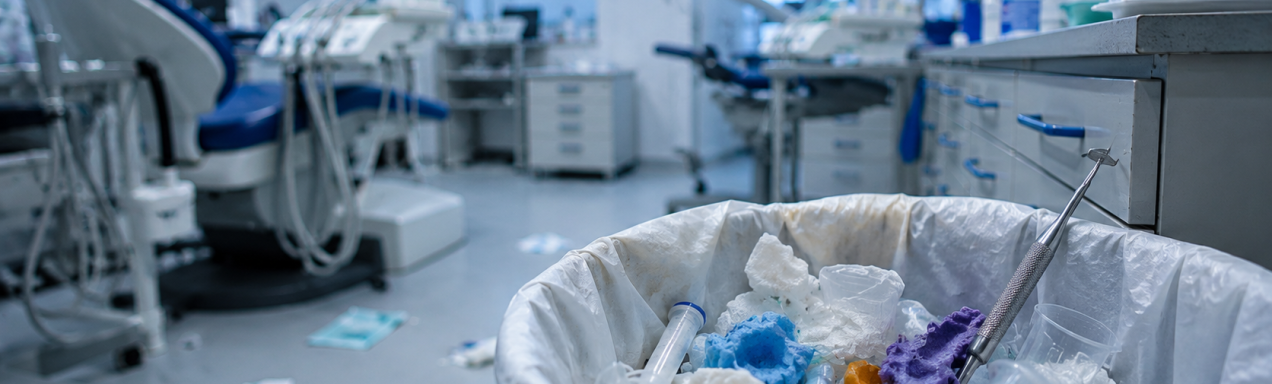
Knowledge, Training Exposure, and Self-reported Dental Material Wastage among Undergraduate Dental Students in Pakistan: A Multicenter Cross-sectional Survey
- Amna Arif
- Jun 26, 2026
- Original Article
Uzma Hasan1*, Amna Arif1, Urooj Lutfi2, Sughra Abid3, Faiza1, Maria Shahwar1, Rubab Saleem3
1Islamic International Dental College, Riphah International University, Islamabad, Pakistan
2Khyber College of Dentistry, Khyber Medical University, Peshawar, Pakistan
3Colosseum Tannlege Stavanger, Norway
*Corresponding address: Islamic International Dental College, Riphah International University, Islamabad, Pakistan
Email: uzma.hasan@riphah.edu.pk
Received: 13 February 2026 / Revised: 30 May 2026 / Accepted: 10 June 2026 / Available Online: 26 June 2026
DOI: https://doi.org/10.63137/jsteam.693718
ABSTRACT
Objectives: Dental material wastage in teaching clinics creates avoidable financial pressure and may contribute to environmental burden when materials are poorly handled or discarded. This study assessed undergraduate dental students’ awareness, training exposure, perceived causes, and self-reported wastage of commonly used dental materials in Pakistan.
Methods: A multicenter cross-sectional questionnaire survey was conducted among third- and fourth-year Bachelor of Dental Surgery students with clinical or laboratory exposure to Operative/Conservative Dentistry and Prosthodontics. Of 642 distributed questionnaires, 600 complete responses were analyzed. Categorical variables were summarized as frequencies, percentages, and Wilson 95% confidence intervals.
Results: Most respondents reported that dental materials were wasted during undergraduate training or clinical/laboratory work (594/600, 99.0%; 95% CI 97.8–99.5). Formal training was limited: 558 students (93.0%; 95% CI 90.7–94.8) reported no training on consequences of wastage, and 540 (90.0%; 95% CI 87.3–92.2) reported no training on avoiding wastage. The leading perceived contributors were inadequate training (372/600, 62.0%) and inaccurate pre-procedure measurement (168/600, 28.0%). The highest prevalence of any self-reported material wastage was observed for polysulphide impression material (600/600, 100.0%), followed by alginate, agar, and gutta-percha points (each 558/600, 93.0%). Anterior and posterior resin composites were among the least frequently reported wasted materials (4.0% and 3.0%, respectively).
Conclusion: Students recognized dental material wastage, but most had not received structured training on its consequences or prevention. Dental colleges should integrate accurate dispensing, supervised manipulation, material stewardship, and waste-minimization practices into preclinical and clinical teaching.
Keywords: Dental education; Dental materials; Material wastage; Undergraduate dental students; Pakistan; sustainability; Cross-sectional survey.
Data Availability: The data supporting this study are available from the corresponding author upon reasonable request.
This work is licensed under Creative Commons Attribution 4.0 International.
How to Cite: Hasan U, Arif A, Lutfi U, Abid S, Faiza, Shahwar M, Saleem R. Knowledge, Training Exposure, and Self-reported Dental Material Wastage among Undergraduate Dental Students in Pakistan: A Multicenter Cross-sectional Survey. J Sci Technol Educ Art Med. 2026;3(1):53-62