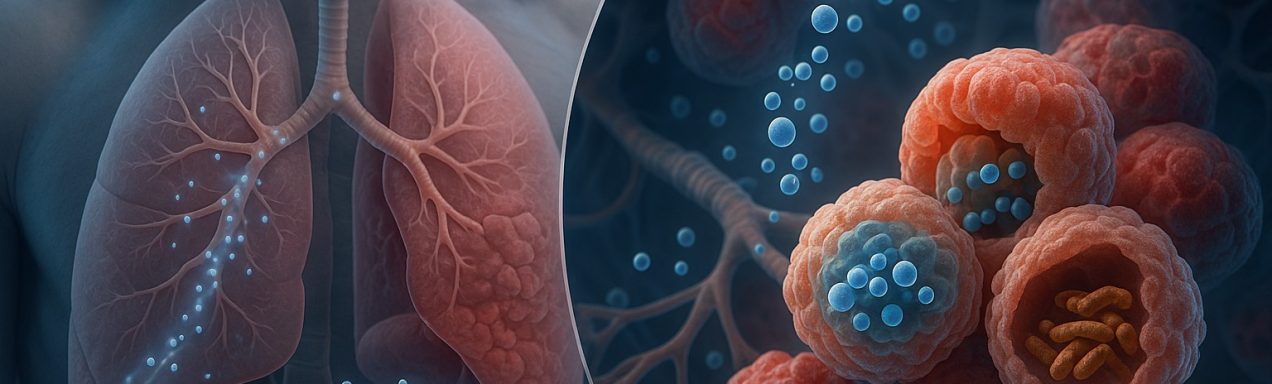
Nanoparticle-based Drug Delivery for Pulmonary Tuberculosis: A Systematic Review on Enhanced Treatment outcomes, Cellular Uptake, Safety and Immunomodulatory Potential
This review highlights how nanoparticle drug delivery can transform tuberculosis treatment by enhancing efficacy, reducing side effects, and improving patient compliance. We discuss recent advances in liposomal and polymer-based formulations, key findings from preclinical and clinical research, and the challenges that remain before widespread clinical adoption.


Enteral to Oral Feeding Progression by Olfactory Stimulation In Preterm Infants – A Systematic Review
Methods Adhering to PRISMA guidelines, an extensive literature search was performed utilizing PubMed and Scopus databases from 2015 to 2024. Eligible studies were randomized controlled trials (RCTs) involving preterm infants (26–34 weeks gestation) who received olfactory stimulation (e.g., milk, vanilla, rose odors) compared to standard care. The primary outcome was the number of days required to achieve full oral feeding. Data were synthesized using a random-effects meta-analysis model, and methodological quality was assessed using the Cochrane RoB 2 tool and GRADE framework. Results Out of 1,029 identified records, five RCTs met inclusion criteria. Meta-analysis showed that olfactory stimulation significantly reduced the time to full oral feeding (mean difference = -1.37 days; 95% CI: -2.36 to -0.39; p = 0.006), with high heterogeneity (I² = 98%). Subgroup analyses indicated the greatest benefit in studies using milk odor and in smaller cohorts. Conclusion A safe and non-invasive strategy, olfactory stimulation appears to facilitate a quicker transition to full oral feeding in preterm infants. However, future research, particularly large-scale studies, is required to ascertain its long-term efficacy and refine intervention protocols. Keywords: Enteral Nutrition; Feeding Behavior; Infant, Premature; Olfactory Stimulation; Randomized Controlled Trial

The Metatext Function in V. Aksenov’s “Moscow Saga” Novel
V. Aksenov’s "Moscow Saga" is a multifaceted novel that blends postmodern elements into a realistic narrative. The author introduces "intermissions," which are sections that interrupt the main plot. Some of these intermissions draw from contemporary media, highlighting the reality of the events. They contrast with mythopoetic tales called "intermissions of incarnations."