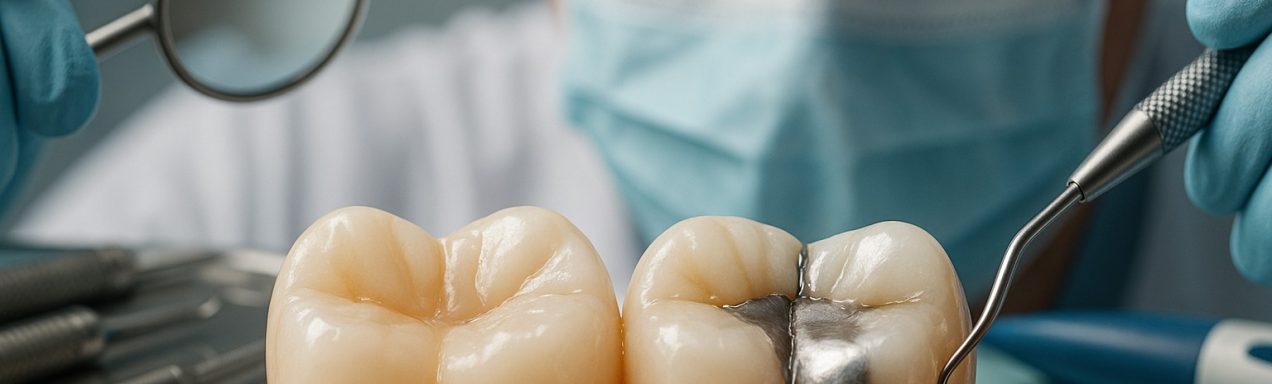
Dental Students’ Preference Between Composite and Amalgam for Posterior Restorations in Pakistan
- Amna Arif
- Dec 15, 2025
- Original Article
Uzma Hasan1, Amna Arif1*, Mehreen Afzaal1, Sughra Saeed1, Maria Shahwar1, Rubab Saleem2
1Islamic International Dental College, Riphah International University, Islamabad, Pakistan
2Colosseum Tannlege, St. Olavs Gate 7, 4005 Stavanger, Norway
*Corresponding address: Islamic International Dental College, Riphah International University, Islamabad, Pakistan Email: amna.arif1@riphah.edu.pk
Received: 03 October 2025 / Revised: 18 November 2025 / Accepted: 04 December 2025 / Available Online: 15 December 2025
DOI: https://doi.org/10.63137/jsteam.477821
ABSTRACT
Objective: Global trends and environmental regulations are driving a transition from dental amalgam to composite resin for posterior restorations. While composite resins offer esthetic and conservative advantages, their technique sensitivity poses challenges in low-resource settings. This study assessed Pakistani dental students’ preferences and perceptions regarding amalgam and composite use, in light of curricular exposure and clinical considerations.
Methods: A multi-center cross-sectional survey was conducted from June to December 2024 across public and private dental institutions in all four provinces of Pakistan. A validated questionnaire was distributed to third- and final-year undergraduate students (n = 500). Data were analyzed using descriptive statistics, Chi-square tests, t-tests, and logistic regression to identify predictors of material preference.
Results: Composite resin was preferred by 81.6% of students for posterior restorations, favored for its esthetics (84.2%) and ease of cavity preparation (90.8%). However, 81.6% still selected amalgam in clinical scenarios demanding durability, such as Class I restorations. While 56.6% perceived amalgam as more durable, composite received greater curricular emphasis. Final-year students and those from private institutions were significantly more likely to prefer composite (p < 0.05). A majority (53.9%) believed composite could replace amalgam, though 51.3% opposed complete amalgam elimination.
Conclusion: Pakistani dental students demonstrate a strong preference for composite resin, influenced by instructional focus and esthetic demands. However, their recognition of amalgam’s utility in certain contexts underscores the need for balanced, context-aware dental curricula that prepare graduates to make evidence based restorative choices in resource-constrained environments.
Keywords: Cost-Benefit analysis; Dental amalgam; Dental esthetics; Dental students; Resin composites
This work is licensed under Creative Commons Attribution 4.0 International.
How to Cite: Hasan U et al., Dental Students’ Preference Between Composite and Amalgam for Posterior Restorations in Pakistan. J Sci Technol Educ Art Med. 2025;2(2):61-68