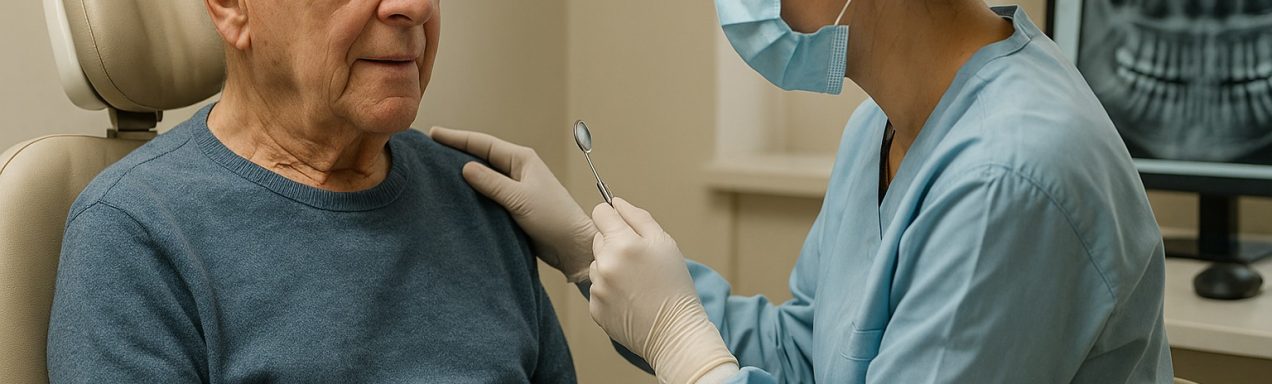
Evaluating Oral Health-Related Quality of Life (OHRQoL) and Oral Health Needs of Geriatric Patients
- Aqsa Arif
- Dec 15, 2025
- Original Article
Aqsa Arif1, Mahr Afroz Khanum1*, Aamna Naeem1, Anusha Khan2, Nawal Fatima1, Sadia Shakeel3, Altaf Shah4
1University College of Medicine and Dentistry, The University of Lahore, Lahore, Pakistan
2FMH College of Medicine & Dentistry, Lahore, Pakistan
3Department of Oral Biology, De’Montmorency College of Dentistry, Lahore, Pakistan
4Department of Community Dental Sciences, Marquette University School of Dentistry, Milwaukee, Wisconsin, USA
*Corresponding address: University College of Medicine and Dentistry, The University of Lahore, Lahore, Pakistan
Email: mehar.r.khan@gmail.com
Received: 03 October 2025 / Revised: 02 November 2025 / Accepted: 21 November 2025 / Available Online: 15
December 2025
DOI: https://doi.org/10.63137/jsteam.823213
ABSTRACT
Objective: Aging has a profound impact on oral health, contributing to diminished functional capacity and
reduced quality of life. Oral health-related quality of life (OHRQoL) is increasingly recognized as a public
health concern, yet limited data exist for the geriatric population in Pakistan. To evaluate oral health needs and
OHRQoL in the geriatric population in Lahore, Pakistan.
Methods: A cross-sectional study was conducted at the Dental Teaching Hospital, University of Lahore, from
September 2023 to January 2024 using non-probability sampling. Clinical oral health status was assessed using
the decayed, missing, and filled teeth (DMFT) index and the Basic Periodontal Examination (BPE). OHRQoL
was measured using the General Oral Health Assessment Index (GOHAI), and oral health needs were evaluated
using the Oral Health Assessment Tool (OHAT) to complement clinical findings with a comprehensive
assessment of oral conditions. Data were analyzed using SPSS version 25. Statistical tests included Pearson
correlation, independent-sample t-tests, and one-way ANOVA with Bonferroni post hoc correction. Effect sizes
and 95% confidence intervals were reported.
Results: A total of 170 geriatric patients were included. The mean DMFT score was 10.29 ± 5.86, with a mean
of 6.14 ± 5.17 missing teeth, and the mean BPE score was 2.41 ± 0.61. Poor oral cleanliness was significantly
associated with higher BPE scores (p = 0.003, r = 0.32), and missing teeth were associated with increased dental
pain (p = 0.004, r = 0.28). Lower education correlated with lower GOHAI scores (p = 0.003, η² = 0.07). The
mean GOHAI score was 38.14 ± 3.53, indicating moderate OHRQoL.
Conclusion: Geriatric patients demonstrated high levels of dental caries, tooth loss, and periodontal disease,
all of which contributed to reduced OHRQoL. Strengthening preventive care, oral hygiene education,
restorative services, and gerodontology training is essential to improve oral health outcomes and enhance the
quality of life of older adults, particularly those from underserved groups.
Keywords: DMF index; Geriatric dentistry; Oral health; Periodontal index; Quality of life
Data Availability: The data supporting this study are available from the corresponding author upon reasonable request.
This work is licensed under Creative Commons Attribution 4.0 International.
How to Cite: Arif A et al., Evaluating Oral Health-Related Quality of Life (OHRQoL) and Oral Health Needs of Geriatric
Patients. J Sci Technol Educ Art Med. 2025;2(2):27-34