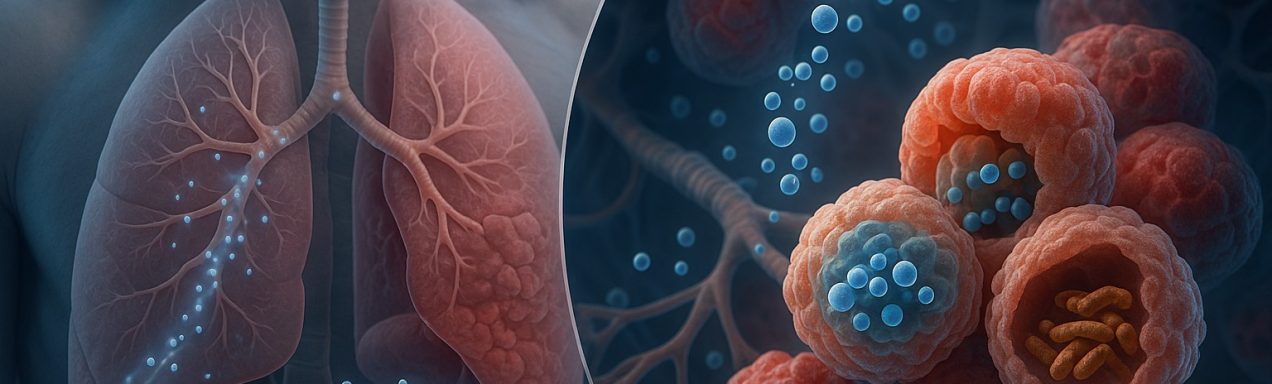
Nanoparticle-based Drug Delivery for Pulmonary Tuberculosis: A Systematic Review on Enhanced Treatment outcomes, Cellular Uptake, Safety and Immunomodulatory Potential
- Malik Saim
- Dec 15, 2025
- Review Article
Malik Saim Jameel1*, Alveena Mushtaq Malik2
1Riphah Institute of Pharmaceutical Sciences, Riphah International University, Lahore Campus, Pakistan
2Faculty of Pharmacy, University of Central Punjab, Lahore, Pakistan
*Corresponding address: Riphah Institute of Pharmaceutical Sciences, Riphah International University, Lahore Campus, Pakistan.
Email: maliksaim7845@gmail.com
Received: 20 September 2025 / Revised: 18 November 2025 / Accepted: 05 December 2025 / Available Online:
15 December 2025.
DOI: https://doi.org/10.63137/jsteam.357341
ABSTRACT
Objective: This systematic review critically evaluates nanoparticle-based drug delivery systems (NDDS) for
pulmonary tuberculosis (TB), emphasizing their therapeutic efficacy, intracellular targeting capabilities, safety,
and translational potential via inhalational routes.
Methods: A systematic search of databases, including PubMed, ScienceDirect, Springer, and institutional
repositories, was conducted for studies published between January 2013 and December 2024. The Inclusion
criteria encompassed nanoparticle formulations targeting Mycobacterium tuberculosis via pulmonary delivery
with reported in vitro, ex vivo, or in vivo outcomes. Quality and bias were assessed using adapted SYRCLE
and Cochrane RoB 2 tools. A total of 15 high-quality studies were selected from 187 records that were initially
screened.
Results: Nanoparticles, including metallic (Ag, ZnO), polymeric (PES, mannosylated gelatin), and lipid-based
(SLNs, NLCs), demonstrated enhanced drug bioavailability, macrophage uptake, and bactericidal activity
against drug-sensitive and multidrug-resistant TB strains. In vivo studies showed superior lung deposition,
reduced bacterial load, and minimized systemic toxicity via pulmonary delivery. Functionalization strategies
like mannosylation improved intracellular uptake. However, concerns remain regarding nanoparticle
cytotoxicity, long-term safety, formulation stability, and inadequate pharmacokinetic profiling.
Conclusion: NDDS for pulmonary TB exhibits significant potential to overcome limitations of conventional
therapies by enabling targeted, sustained, and safer drug delivery. Pulmonary and intracellular targeting
approaches show strong preclinical efficacy, but translational progress is limited by safety and regulatory gaps.
Future research must focus on standardized toxicology, in vivo pharmacokinetics, and clinical trials to establish
these platforms as frontline TB therapies.
Keywords: Drug delivery systems; Nanoparticles; Pulmonary drug delivery systems; Tuberculosis;
Tuberculosis, Multidrug-resistant
This work is licensed under Creative Commons Attribution 4.0 International.
How to Cite: Jameel MS et al., Nanoparticle-based Drug Delivery for Pulmonary Tuberculosis: A Systematic Review on
Enhanced Treatment Outcomes, Cellular Uptake, Safety, and Immunomodulatory Potential. J Sci Technol Educ Art Med.
2025;2(2):83-101