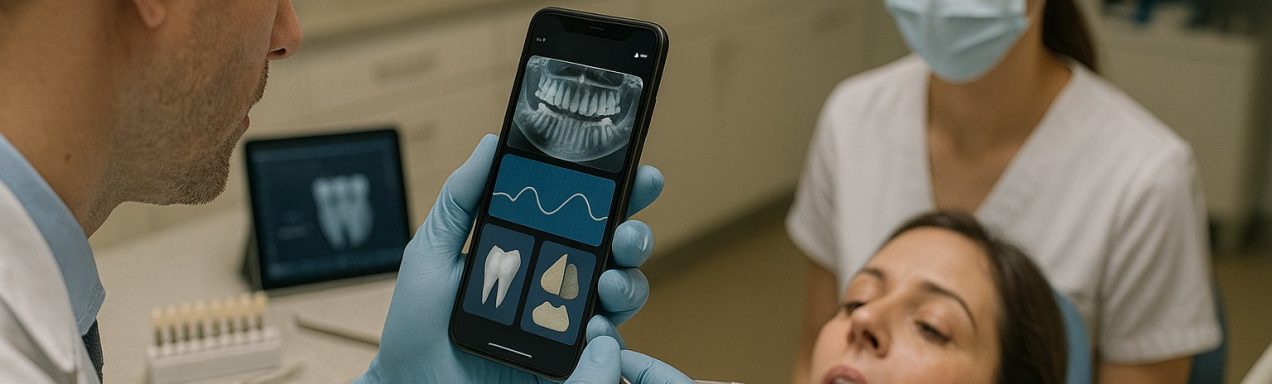
Use of Smartphones and medical apps in Dentistry
- Ayesha Fahim
- Dec 15, 2025
- Original Article
Saba Rehman1, Attique ur Rehman2*, Rizwan Mahmood3, Iquebal Hasan4
1Department of Medical Education, Al-Aleem Medical College, Lahore, Pakistan
2Assistant Professor and Head, Department of Operative Dentistry, Islam Dental College, Sialkot, Pakistan
3School of Dental Sciences, Universiti Sains Malaysia, Kota Bharu, Malaysia
4Workman School of Dental Medicine, High Point University, USA
*Corresponding address: Department of Operative Dentistry, Islam Dental College, 7 KM Pasrur Road, Sialkot, Pakistan Email: attiquedentist@gmail.com
Received: 19 September 2025 / Revised: 03 November 2025 / Accepted: 20 November 2025 / Available Online: 15 December 2025
DOI: https://doi.org/10.63137/jsteam.622361
ABSTRACT
Objective: To assess the usage patterns, perceptions, and associated factors related to smartphone and medical/dental app use among dentists and dental students in Punjab, Pakistan.
Methods: A cross-sectional, web-based survey was conducted among 900 dentists and dental students from multiple dental institutions in Punjab. Data were collected using a structured, self-administered questionnaire adapted from a previously validated tool, comprising items on demographics, smartphone usage patterns, purposes of app use, and perceptions regarding dental and medical applications. Responses were recorded through Google Forms, and all questions were mandatory. Data were analyzed using SPSS version 24. The Wilcoxon–Mann–Whitney test was applied for two-group comparisons, while the Kruskal–Wallis test was used for analyses involving more than two groups; post hoc tests were conducted where appropriate. Statistical significance was set at p < 0.05.
Results: Although smartphone ownership was high, professional use of dental and medical apps was relatively low. Most participants used apps less than once per week, with 79.2% reporting daily use of 1–20 minutes. Diagnostic assistance (38%) and reviewing dental literature (33%) were the most common purposes of use. Participants expressed strong agreement that apps provide useful information (mean = 3.90), are easy to obtain (mean = 3.80), and that they were interested in receiving more apps (mean = 3.88). Mixed perceptions were observed regarding the use of apps to replace textbooks (mean = 2.58). Teaching experience significantly influenced perceived ease of obtaining apps (H = 7.72, p = 0.021), and qualification level significantly affected learning through apps (H = 13.27, p = 0.010).
Conclusion: Despite widespread smartphone access and positive perceptions of app usefulness, the use of dental and medical apps remains limited. Enhanced digital integration, faculty and student training, and improved infrastructural support may help increase meaningful adoption of app-based learning and clinical support tools within dental education in Pakistan.
Keywords: Mobile applications; Smartphone; Surveys and questionnaires; Cross-sectional survey; Pakistan; Dentists; Students
This work is licensed under Creative Commons Attribution 4.0 International.
Citation: Rehman S et al., Use of Smartphones and Medical Apps in Dentistry. J Sci Technol Educ Art Med. 2025;2(2):19-26