
Knowledge, Training Exposure, and Self-reported Dental Material Wastage among Undergraduate Dental Students in Pakistan: A Multicenter Cross-sectional Survey
Abstract Background: Dental material wastage in teaching clinics creates avoidable financial pressure and may contribute to environmental burden when materials are poorly handled or discarded. This study assessed undergraduate dental students’ awareness, training exposure, perceived causes and self-reported wastage of commonly used dental materials in Pakistan. Methods: A multicentre cross-sectional questionnaire survey was conducted among third- and fourth-year Bachelor of Dental Surgery students with clinical or laboratory exposure to Operative/Conservative Dentistry and Prosthodontics. Of 642 distributed questionnaires, 600 complete responses were analysed. Categorical variables were summarised as frequencies, percentages and Wilson 95% confidence intervals. Results: Most respondents reported that dental materials were wasted during undergraduate training or clinical/laboratory work (594/600, 99.0%; 95% CI 97.8–99.5). Formal training was limited: 558 students (93.0%; 95% CI 90.7–94.8) reported no training on consequences of wastage and 540 (90.0%; 95% CI 87.3–92.2) reported no training on avoiding wastage. The leading perceived contributors were inadequate training (372/600, 62.0%) and inaccurate pre-procedure measurement (168/600, 28.0%). The highest prevalence of any self-reported material wastage was observed for polysulphide impression material (600/600, 100.0%), alginate, agar and gutta-percha points (each 558/600, 93.0%). Anterior and posterior resin composites were among the least frequently reported wasted materials (4.0% and 3.0%, respectively). Conclusion: Students recognised dental material wastage, but most had not received structured training on its consequences or prevention. Dental colleges should integrate accurate dispensing, supervised manipulation, material stewardship and waste-minimisation practices into preclinical and clinical teaching.

Perception of Soft Skills among Undergraduate Dental Students
It is the need of the hour to introduce the soft skills curriculum in undergraduate dental program as most of the students are aware of its importance in their professional life but could not comprehend whether they are being taught about them or not.

Developing and Validating a Scoring Framework for the Assessment of Curriculum Viability in Undergraduate Medical Education
This study presents the development and validation of a scoring framework for assessing curriculum viability in medical education. Using a two-phase quantitative design, norm tables were established for student and teacher questionnaires, followed by validation through the Modified Angoff Method and ROC analysis. The findings propose practical cut-off scores for interpreting curriculum viability, offering a structured and evidence-based tool to identify strengths and areas requiring improvement. This framework supports informed decision-making in educational planning and provides a foundation for further validation across diverse institutional contexts.

Trust, Ethical Awareness, and Clinical Reliance on Artificial Intelligence: A Comparative Cross-Sectional Study Among Senior Medical and Dental Students
Background: The integration of AI into clinical decision-making raises critical questions about over-reliance, ethical awareness, and professional autonomy among future clinicians. Despite rapid AI adoption in healthcare, structured AI education in medical and dental curricula remains limited, particularly in low- and middle-income country settings. Key findings: Dental students demonstrated significantly higher AI trust (70.2 ± 10.8 vs. 65.9 ± 12.0; p < 0.001) but lower ethical calibration compared with medical students. Over-reliance behavior was identified in 28.5% of participants overall, with a higher prevalence among dental trainees (32.3% vs. 25.4%). Mediation analysis revealed that AI trust partially mediated the relationship between curriculum exposure and clinical reliance, accounting for 36% of the total effect. Conclusion: Greater curricular AI exposure increases trust, but without parallel ethical training, it may inadvertently promote uncritical reliance on AI recommendations. Integrating structured AI literacy and ethical reasoning into health professions education is essential for responsible clinical practice.

Developing and Validating a Global Digital Health Resilience Index to Predict Cross-national Health Outcomes During Public Health Shocks
Objective: To develop and validate a composite Global Digital Health Resilience Index (GDHRI) constructed from pre-shock baseline indicators and to assess its predictive capacity for cross-national variation in health outcomes during a public health shock. Methods: We conducted a cross-national ecological study using publicly available, aggregate country-level datasets. The GDHRI was constructed exclusively from pre-shock baseline indicators (2015–2019) capturing digital engagement capacity, information ecosystem integrity, and structural health system readiness. No shock-period variables were used in index development. Principal component analysis and confirmatory factor analysis were applied to establish construct validity. Predictive validity was evaluated against shock-period outcomes (2020–2022), including excess mortality, vaccination coverage, health service disruption, and case-fatality ratio, using multivariable cross-sectional regression, fixed-effects panel models, and machine learning robustness checks.

Self-Reported Hepatitis B Vaccination Status among Dental Health Care Providers and Students at Dental Colleges
Background: Despite the availability of effective vaccination, Hepatitis B virus (HBV) infection remains a major occupational hazard in developing countries for healthcare workers, particularly dental professionals, due to frequent exposure to blood, saliva, and sharp instruments. Objective: The study aimed to assess the hepatitis B vaccination status among dental faculty, students, and staff at Dental College HITEC IMS.

Educational Quality and Reliability of YouTube Videos on Hawley Retainer Fabrication: A Cross-sectional Content Analysis
YouTube is widely used by dental students to learn procedures such as Hawley retainer fabrication. However, the lack of peer review may result in variable educational quality and reliability. Therefore, evaluating the accuracy and completeness of these videos is essential before considering them as reliable learning resources.

Assessing Knowledge, Adherence, and Barriers to Cross-Infection Control Measures Among Dental Students: A Mixed-Methods Study
Cross-infection control is critical in dental settings due to routine exposure to blood, aerosols, and sharp instruments. This convergent mixed-methods study assessed knowledge, compliance, and barriers to infection control among 91 clinical dental students in Pakistan.

Evaluating Oral Health-Related Quality of Life (OHRQoL) and Oral Health Needs of Geriatric Patients
Aging has a profound impact on oral health, contributing to diminished functional capacity and reduced quality of life. With the growing geriatric population, oral health-related quality of life (OHRQoL) has emerged as an important public health concern. This study aimed to evaluate the oral health needs and OHRQoL in the geriatric population
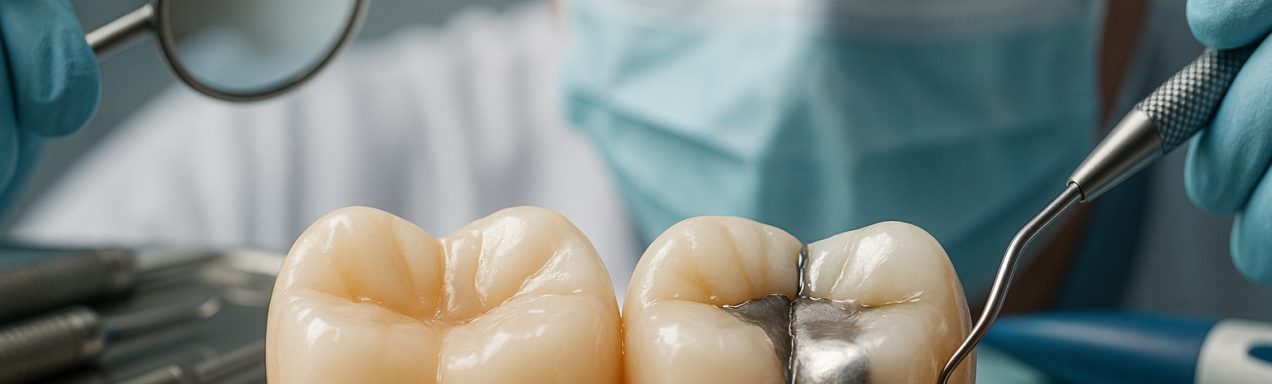
Dental Students’ Preference Between Composite and Amalgam for Posterior Restorations in Pakistan
Background: Dental restorative material choice has shifted globally, with composite resin increasingly preferred over amalgam due to esthetics and conservative preparation. However, amalgam remains valued for its cost-effectiveness and durability. Limited data exist on dental students’ perspectives in Pakistan. Methods: A cross-sectional, questionnaire-based survey was conducted among 76 third- and final-year dental students at Islamic International Dental College (IIDC), Riphah International University, between June and December 2019. The questionnaire assessed student perceptions of ease of cavity preparation, handling, durability, cost, and patient demand. Data were analyzed using SPSS version 23 to generate descriptive statistics. Results: Composite resin was the preferred material for posterior restorations among 81.6% of students, primarily due to its esthetics, ease of preparation (90.8%), and patient preference (84.2%). Amalgam was favored for its lower cost (84.2%) and greater longevity (53.9%), and was most often selected for Class I restorations. Despite these advantages, 51.3% of students opposed the complete discontinuation of amalgam use. Conclusion: Dental students at IIDC demonstrated a stronger preference for composite resin, reflecting global trends and patient expectations. Nonetheless, amalgam continues to be acknowledged for its affordability and clinical durability, particularly in specific scenarios. Educational curricula should emphasize evidence-based decision-making that integrates both esthetic and functional considerations. Keywords: Composite resin, Dental amalgam, posterior restorations, dental students, esthetics, cost-effectiveness